
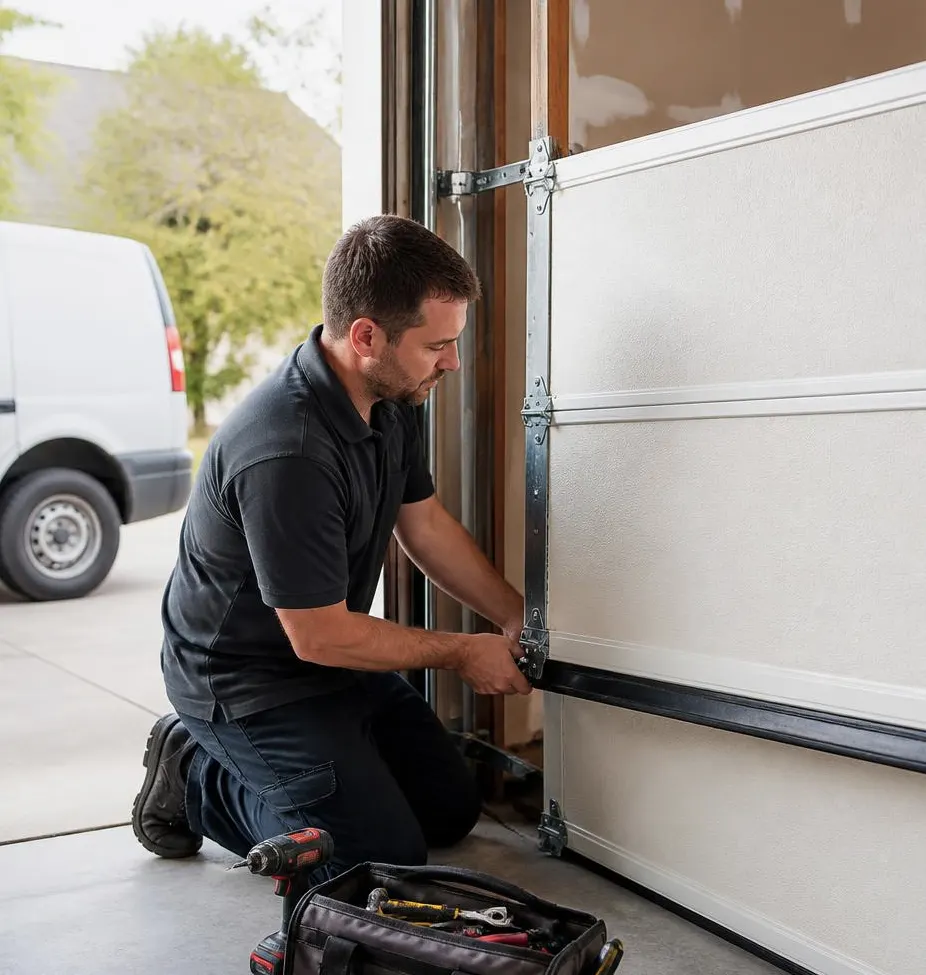
The Quick Rule of Thumb
A noisy garage door is almost always a lubrication or hardware problem, not a dying motor — the exceptions are grinding, which often means metal-on-metal wear, and sudden loud bangs, which can mean a spring is about to fail. Everything in between is usually fixable in under an hour with the right parts. The trick is matching the sound to the cause instead of guessing, because the fix for a squeal is nothing like the fix for a pop.
Grinding
Grinding sounds like gravel in a blender, usually worst when the door first starts moving or passes a specific spot on the track. It's a texture, not a pitch — you feel it as much as hear it.
A technician checks these in order:
- Rollers first. Nylon rollers wear down and develop flat spots, especially after years of humidity swelling and shrinking the door panels around them. Replacement rollers run roughly $5–$15 each in parts; a full set swap is a straightforward repair.
- Bearings next. If the rollers look fine, worn bearings inside them or in the end hinges create the same grinding feel. These get replaced along with the roller as a unit.
- Track alignment. Salt air near the coast accelerates rust on track hardware, and a track that's bent or pulled loose from its mounting will grind as rollers fight to stay inside it. This needs realignment, not lubrication, and ignoring it leads to a roller jumping the track entirely.
- Opener gear last. If the grinding only happens when the opener runs and the door barely moves, the gear kit inside the opener unit may be stripped. That's an opener repair, not a door repair.
Squealing
Squealing is a higher-pitched, repetitive sound tied to the door's motion — it speeds up and slows down with the door itself.
- Lubrication is checked first because it's the most common cause and the cheapest fix. Hinges, rollers, and the torsion spring itself dry out, especially in a garage that runs hot through a Pensacola summer. A silicone-based garage door lubricant (not WD-40, which attracts grit) on hinges, rollers, and the spring coil usually quiets things down within a few open-close cycles.
- Worn rollers are checked second if lubrication doesn't help — a dry squeal is often the overture to the grinding sound above, meaning the roller is on its way out.
- Spring friction is checked third. Torsion springs coil and uncoil thousands of times a year, and in humid, salty air the coils can develop light surface rust that causes friction. This is a job for a technician, not a DIY lubrication fix, because torsion springs are under significant tension.
Popping
Popping is a single sharp sound, often startling, that happens at one point in the door's travel rather than continuously.
- Spring tension is checked first. A torsion spring releasing tiny amounts of built-up stress, or a cable seating unevenly on its drum, both produce a pop. This is also how a spring often sounds in the days or weeks before it fails outright — worth a professional look rather than waiting it out.
- Panel flex is checked second. Steel garage door panels expand and contract with heat, and afternoon downpours followed by sun can cause rapid temperature swings that make a panel pop as it flexes back into shape. This is cosmetic and not urgent on its own, but worth mentioning to a technician during a maintenance visit.
- Track misalignment is checked third, particularly where the track bolts to the wall — a bracket that's worked loose will let the track shift slightly and pop back into place as the door passes. Re-tightening or re-anchoring the bracket solves it.
Rattling
Rattling is a loose, metallic shake, usually most noticeable on windy days or when a truck passes outside.
- Loose hardware is checked first. Bolts on hinges, roller brackets, and the track itself work loose over time from daily vibration. A technician goes panel by panel with a socket wrench, which is also good practice for homeowners to do seasonally.
- Opener chain or belt is checked second. A chain-drive opener that's lost proper tension will slap against the rail. Chain tension is adjustable and takes a few minutes to correct.
- Hinges are checked last. Worn hinge pins develop play that creates a rattle at each hinge point as the door bends around the curve at the top of the track. These are inexpensive to replace but need to be done in the right order to keep the door balanced.
When to Call Pensacola Garage Door Pro
If the noise is new, getting worse, or paired with the door feeling heavier or jerkier than usual, that's the point to stop troubleshooting and call. A popping or grinding sound involving the spring especially shouldn't wait — a spring under tension that fails suddenly can cause real damage or injury. Pensacola Garage Door Pro handles spring replacement and full garage door maintenance visits that check rollers, hinges, track alignment, and hardware all at once, which is the more efficient way to deal with a door that's started making more than one kind of noise. Routine maintenance also catches the early rust and corrosion that salt air causes along the coast before it turns into a bigger repair.
If your garage door in Pensacola, FL has started talking back to you, call Pensacola Garage Door Pro for a diagnosis and a fix done right the first time.