
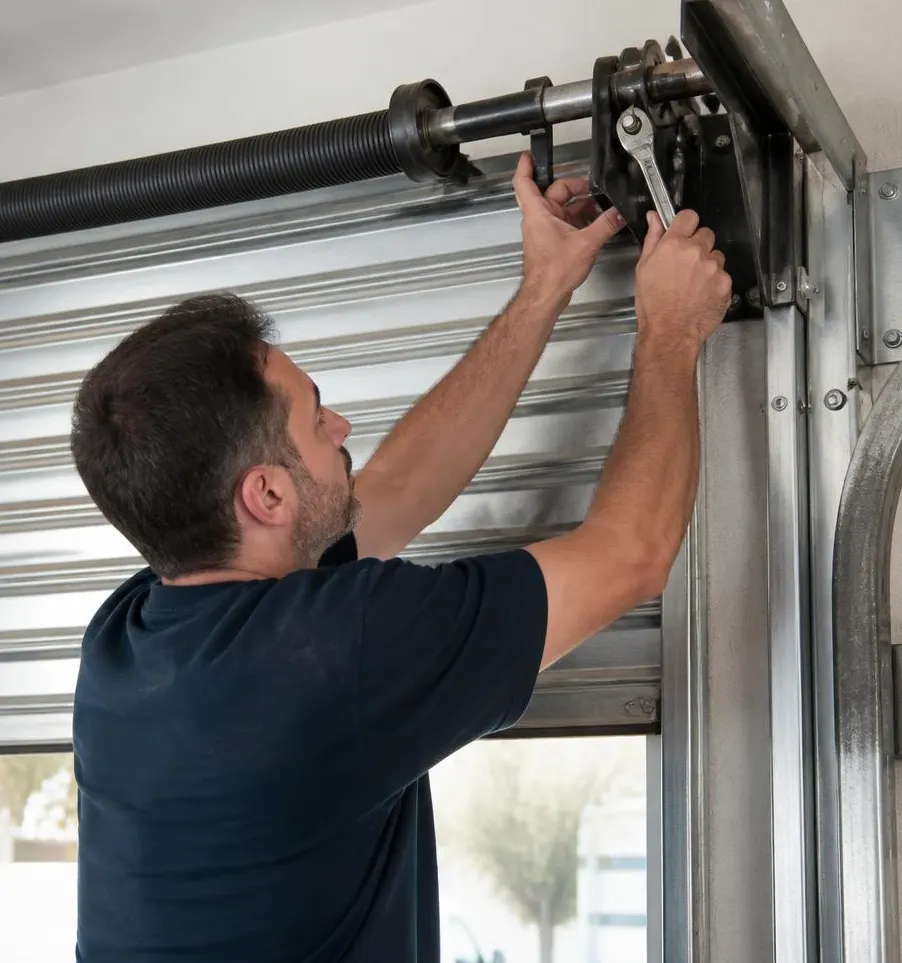
A Garage Door That Won't Budge: What a Tech Checks First and Why
The rule of thumb: if the door won't open at all, the problem is almost always power, a safety sensor, or a broken spring, in that order. The exceptions are doors that open a few inches and stop (usually a track or sensor issue), doors that hum but don't move (motor gear or capacitor), and doors that worked fine until a storm rolled through and knocked out power or jarred something loose.
What You'll Notice First
- Nothing happens at all — no light, no sound, no motion when you press the button.
- The opener hums or clicks but the door doesn't move.
- The door opens a few inches and reverses or stops partway.
- The door feels impossibly heavy when you try to lift it manually.
- One side lags behind the other or the door sits crooked in the opening.
Each of these points to a different stage in the chain between your remote and the door itself, and a technician works through that chain in a specific order because it's the fastest way to rule things out.
1. Power to the Opener
First check: is the opener actually getting power? A tripped breaker, a tripped GFCI outlet in the garage, or a unit that's simply been bumped loose from its outlet is more common than people expect, especially after a storm with power surges or brief outages. The fix here is just restoring power and resetting the breaker; no tools required.
2. The Safety Sensors
If there's power but the door won't close (or reverses immediately), the next stop is the photo-eye sensors near the bottom of the track. These have to be aligned and unobstructed, and Gulf Coast humidity causes enough condensation and grime buildup that a foggy or shifted lens can throw them off. A tech wipes the lenses, checks that both LED indicators are solid (not blinking), and realigns the brackets if the door or track has shifted slightly, which happens more than people think in homes where wood framing swells and contracts with moisture.
3. The Remote, Wall Button, and Manual Lock
Dead batteries, a wall switch that's lost connection, or a vacation lock switch that got bumped are all quick checks before anything gets taken apart. On older doors, there's sometimes a manual lock bar on the inside of the door that someone engaged and forgot about; it physically bolts the door shut no matter what the opener does.
4. Broken Springs
If the opener has power and the sensors are clear but the door still won't lift, or it only moves when you push hard manually, a broken torsion or extension spring is the next and most common culprit. You'll usually know because the door feels like dead weight and may have made a loud bang at some point. Springs are under heavy tension and salt air speeds up corrosion on the coils, so coastal homes often see spring failure sooner than inland ones. This is not a DIY fix; replacement means releasing tension safely and installing a matched spring rated for the door's weight.
5. Cables and Rollers
A frayed or slipped cable produces a similar symptom to a broken spring: the door hangs unevenly or won't move on one side. A tech inspects the cable drums and rollers for fraying, rust, or a cable that's jumped its track, which is common once rollers wear out or get gritty from blown sand and humidity.
6. The Opener Motor and Gear
If the opener hums but the door doesn't move, the drive gear inside the unit may be stripped (a common failure point on openers more than eight or ten years old) or the capacitor that starts the motor has worn out. This usually means opener repair or replacement, not a track or spring issue.
7. Track Alignment and Obstructions
Last on the list because it's the easiest to rule out visually: a bent track, a section pulled away from the wall, or debris jammed in the track. Afternoon downpours and humidity swings can warp wood-framed doors slightly over time, which throws tracks out of alignment even when nothing looks obviously broken.
When to Call Pensacola Garage Door Pro
If you've checked power, batteries, and the manual lock and the door still won't open, stop there. A door that feels heavy, hangs crooked, or has an opener that hums without moving almost always means spring, cable, or motor work that needs the right tools and tension equipment. Pensacola Garage Door Pro handles Spring Replacement and Garage Door Opener Repair & Installation for homes throughout Pensacola, Gulf Breeze, Perdido Key, and the surrounding Gulf Coast, and we diagnose the issue on-site rather than guessing over the phone.
If your garage door in Pensacola, FL won't open, call Pensacola Garage Door Pro for a same-week diagnosis and repair.